
Adapted from WESTPEX – The First 50 Years by Kristin Patterson, © 2010 WESTPEX, Inc. · About this history · ↑ History overview
Before there was WESTPEX, there was a rotating regional stamp show that moved cities every year. This is the story of how a permanent committee of Bay Area volunteers turned that into one of the most respected philatelic exhibitions in the United States — and the first ten WESTPEX shows that put it on the map.
Before WESTPEX, 1940 – 1955
In 1940, the Council of Northern California Philatelic Societies (CNCPS) — known to its members simply as “the Council” — was founded to support the Bay Area’s stamp clubs. The Council met quarterly, and each year it produced an annual show in November, hosted on a rotating basis by one of its member societies. The first Council show ran in 1941. By 1951, the show had become PENPEX, hosted by the Peninsula Stamp Club in Burlingame.
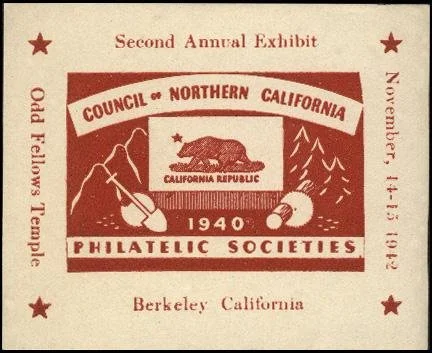
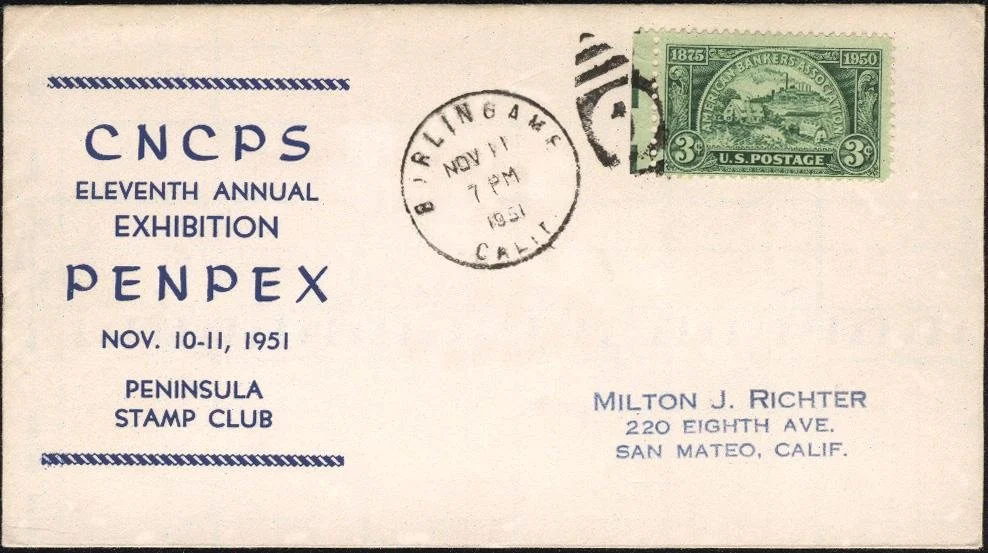
But a rotating show had structural problems. Each year a new committee started from zero. Exhibitors grew reluctant to lend their material to organizers they didn’t know. Dealers were reluctant to sign on for shows that stayed small because of that reluctance. The Council’s leaders started asking the obvious question: since most of the volunteers came from the Bay Area anyway, why not host the show in the same place every year, with continuity in the name and the people running it?
In 1955, the Council recommended the creation of a Permanent Exhibition Committee — five Bay Area philatelists charged with investigating an annual show. Council President Charles A. McKeown appointed Joseph M. Clary as chairman, with Robert A. Hanson, Jack R. Hughes, Dr. Sheldon Goodman, and Fred B. Thomas as members, and McKeown himself as ex-officio. Mrs. Nina S. Thomas was appointed secretary. Their first meeting was held December 1, 1955.
The Founders, 1955 – 1957
In January 1956, philatelist and artist Morton Noble published pencil sketches of the founding committee in Weekly Philatelic Gossip’s “Leaders in the Bay Area Philatelic Activities” feature.
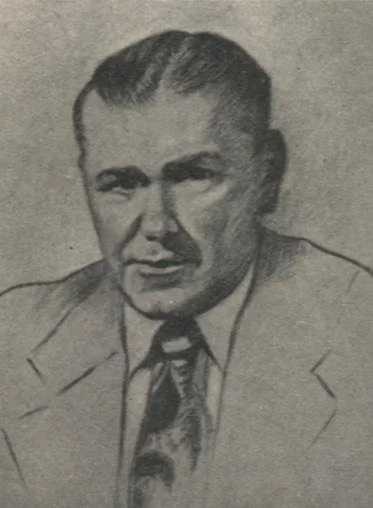
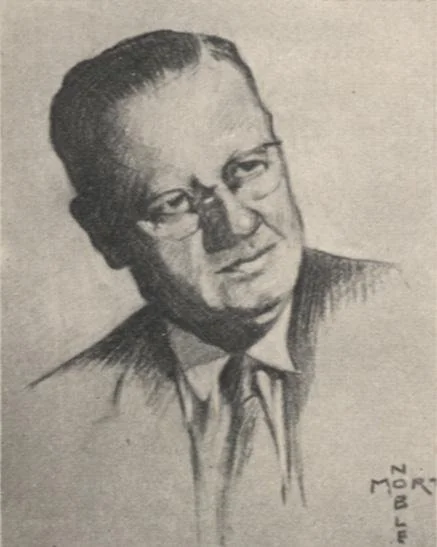
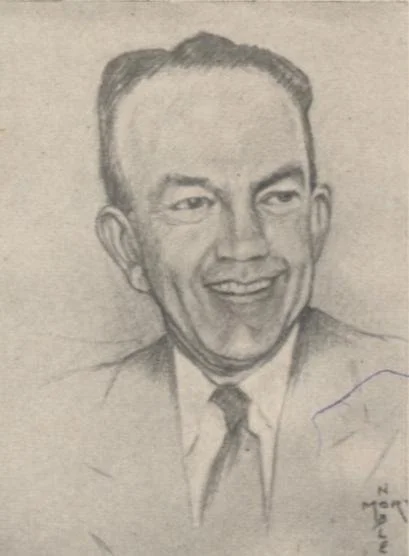
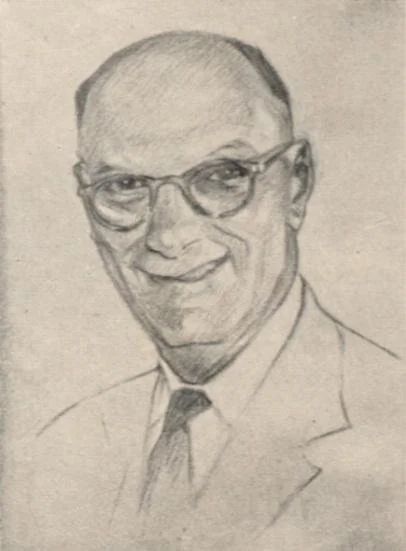
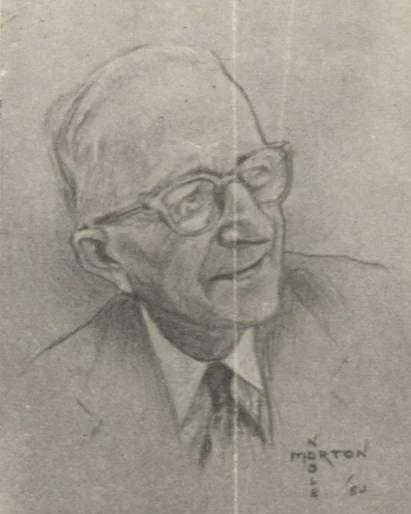
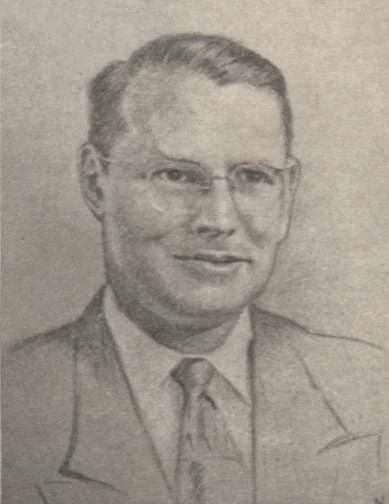
Sketches by Morton Noble for the January 28, 1956 Weekly Philatelic Gossip article “Leaders in the Bay Area Philatelic Activities.”
Clary was, in retrospect, the right person for the job: he had served as general chairman of the 68th Annual American Philatelic Society convention in 1954 — a four-day show at the Sir Francis Drake Hotel that the APS later judged one of its most successful ever, and produced a 26-page transcript afterward to guide future committees.
At its first meeting, the new committee laid down what they thought a permanent regional show should look like. Some of those decisions still hold today:
- The exhibition should be separated from banquets and other activities that compete with the bourse.
- Frames should be carefully engineered with independent lighting — and never loaned out.
- The organization should be non-profit, so that donations are deductible.
- A four-day show, with its own paid secretary and general chairman.
- Hotel Whitcomb in San Francisco was probably the cheapest available exhibition space, at about $150 per day.
By spring of 1956, Clary was reporting that the new show should run in spring — to avoid colliding with the Council’s November show, the APS, and SESCAL. The Council amended its by-laws to authorize a Permanent Exhibition Committee that would run an annual exhibition each May, financially self-sustaining and administering its own funds. The Council seeded the committee with $50.
Then came the question of the name. At their June 1956 meeting, the committee chose PACPEX — Pacific Philatelic Exhibitions. Clary wasn’t satisfied. At an impromptu meeting on July 5, 1956, the committee unanimously agreed on a different acronym.
We looked for a name that would convey the thought that this exhibition represents the best efforts of West Coast philately. We believe that the name WESTPEX will put the idea across.
— Joseph M. Clary, Council Courier, September 1, 1956
In September 1956, the committee was incorporated as the Association for Western Philatelic Exhibitions, Inc. — WESTPEX for short. California granted corporate status on May 1, 1957.
The first show was originally targeted for spring 1958. But fundraising and frame construction took longer than the committee hoped, and they decided that a 1960 debut — with a full year of additional preparation — would launch the show better than rushing into 1959. The committee set a goal of 300 custom-built aluminum exhibit frames, raising money from collectors and clubs who could donate $25 to permanently engrave their name on a frame plaque.
The First Show, 1960
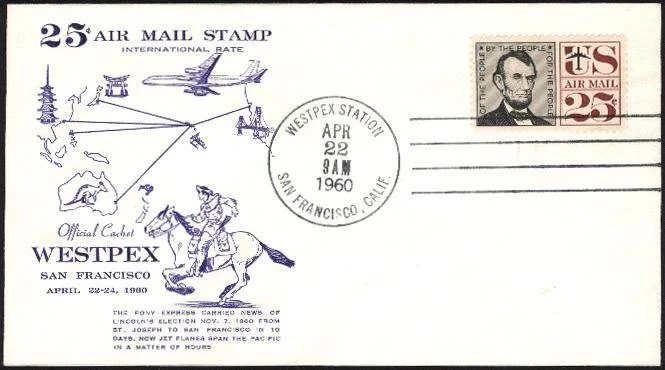
The first WESTPEX ran April 22–24, 1960, at the Whitcomb Hotel on 9th and Market Streets in San Francisco. Eighteen volunteers, with Clary as chairman and Cyrus R. Thompson as his assistant, ran a show built around a single Western theme: the Pony Express, whose 1860 founding the show was timed to coincide with.
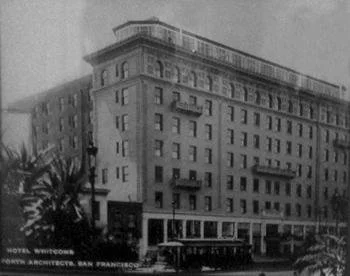
Tickets were 50¢ for a day, $1 for the full three days, and 25¢ for children under 14. A season-ticket holder was eligible for door prizes that included a transistor radio, a complete set of UN issues, and merchandise certificates. Seventeen dealers attended — two of them traveling 2,800 and 2,900 miles from the East Coast.
At 11 a.m. on opening day, just two blocks from the hotel, the U.S. Postal Service held the First Day of Issue ceremony for the new 25¢ Lincoln International Air Mail stamp at the rotunda of San Francisco City Hall, with music by the Twelfth Naval District Band and a welcome from Acting Mayor Alphonso J. Zirpoli. Forty-five minutes later, San Francisco Postmaster John F. Fixa cut the WESTPEX ribbon at the Whitcomb.
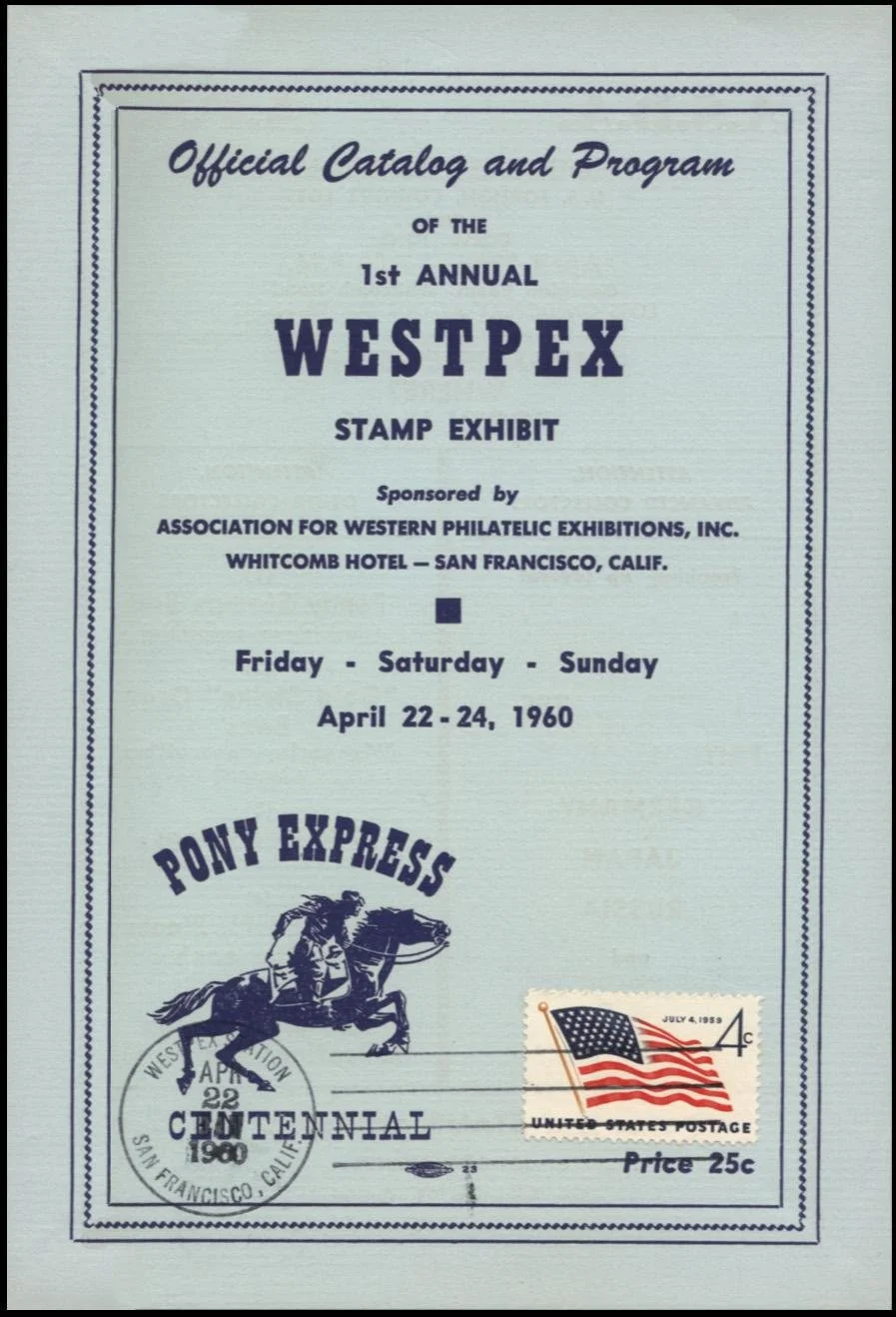
The official cachet by local artist Nat Levy captured the theme exactly: a Pony Express rider, a jet plane crossing the Pacific, and the inscription “The Pony Express carried news of Lincoln’s election November 7, 1860 from St. Joseph to San Francisco in 10 days. Now jet planes span the Pacific in a matter of hours.” Levy himself entered the show with a two-frame exhibit titled Ghost Towns of the Gold Rush Days, which won a silver award.
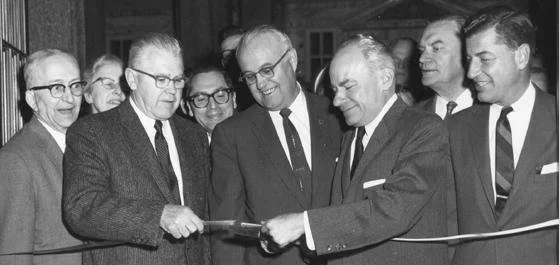
We of WESTPEX welcome you to this, our first annual fixture. In the beginning WESTPEX was only a dream, something we talked about as being a good idea. Now that the idea has emerged as a reality, we are humbly proud of our efforts. … We expect to promote many more spring shows in Northern California and to see WESTPEX grow in stature and importance in the philatelic world.
— Joseph M. Clary, opening greeting in the WESTPEX 1960 program
The show ran 32.5 hours over three days — a stretch that would shrink to 22 hours by 2010. The Reverend John S. Bain won the Grand Award and the APS medal for Canada Imperial Penny Postage Issue 1898, chosen from 176 competitive frames. The show finished with a $900 surplus, of which $500 was set aside toward the next 100 frames the committee needed to hit its 300-frame goal.
Settling In, 1961 – 1969
The second WESTPEX, in April 1961, moved to the brand-new Jack Tar Hotel on Van Ness Avenue at Geary Street. It would become the show’s home for the next 23 consecutive years — and 41 years over WESTPEX’s history. The Night Cap Party from 1960 was eliminated (food service costs had outstripped ticket revenue) and replaced by an Awards Banquet on Saturday evening.
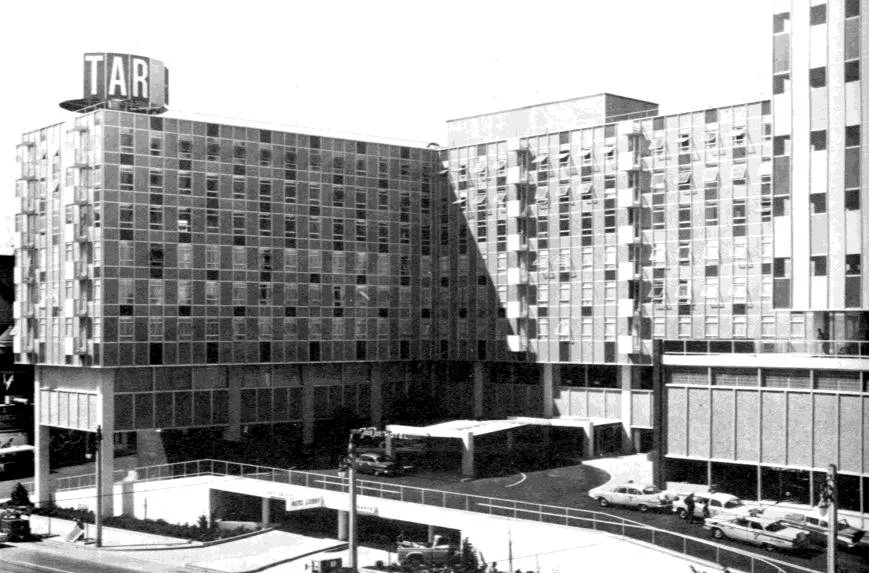
By the third show in 1962, San Francisco Mayor George Christopher had proclaimed the dates “WESTPEX Week,” and Council Courier editor Robert W. Stauffer wrote that “WESTPEX has ‘come of age’ on the national scene… Only the international shows are larger in scope; no national show, regardless of auspices, can boast finer entries or finer facilities.”
That same year brought a less welcome surprise. In June 1962, National Stamp News announced plans for the First Annual Westchester County Stamp & Coin Show — “Westpex” — in New York. The WESTPEX board moved quickly. Clary wrote to the Westchester organizer Earl H. Peltin asking him to drop the name; Peltin’s reply was breezy. (“Don’t you really believe that you are unduly alarmed at the possibility of confusion between our shows? After all, we are separated by three thousand miles.”) The committee, with help from philatelist and future WESTPEX judge Eugene Tinsley and the Los Angeles law office Harris, Kiech, Russell & Kern, applied for federal trademark registration on August 2, 1962. Peltin eventually agreed — sarcastically — to drop the name. U.S. Patent Office Registration No. 802,407 was granted January 18, 1966; the ® mark went on every WESTPEX show ticket from that day forward.
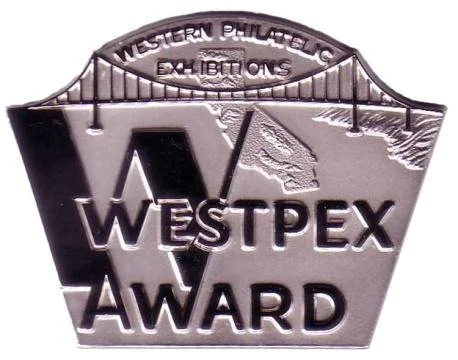
In 1964, an open design competition produced the new WESTPEX exhibit medal. Robert S. Oesch of Los Angeles took first and second place; John R. Michaelson of St. Petersburg, Florida, took third. The same medal — gold, silver, and bronze — has been engraved on the back with the winner’s name and year ever since.
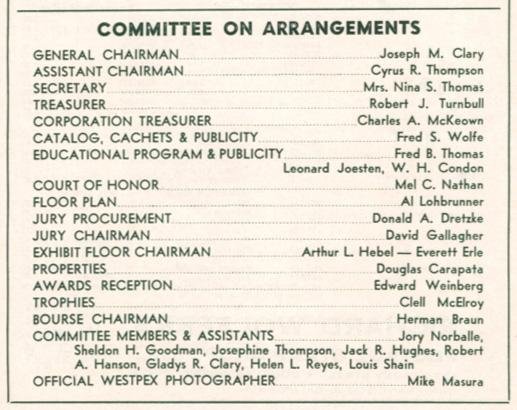
By 1964 the volunteer roster had grown to twenty-seven, and the show program for the first time named the women who had been volunteering from the very first show — Gladys Clary, Helen Reyes, Nina Thomas, and Josephine Thompson among them.
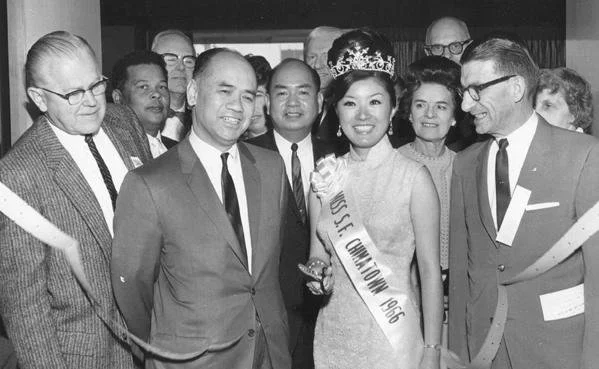
Two years later, in 1966, the ribbon-cutting was performed by recently-crowned Miss S.F. Chinatown June Gong, alongside the newly-appointed San Francisco Postmaster Lim P. Lee — at the time the highest federal appointment ever held by a Chinese American. (In 2009, Congress would rename the nation’s first Chinese Post Office in San Francisco’s Chinatown the Lim Poon Lee Post Office in his honor.)
By the end of the decade, the operation had matured. The same officers had served the show for nearly its entire run: Clary as chairman, Cyrus R. Thompson as assistant chairman, Robert J. Turnbull as treasurer, with Nina S. Thomas and later Adrienne O’Neill as secretary. Twenty-eight volunteers staffed each show by 1966. Booth holders grew from seventeen at the first show to thirty-eight by 1969. Hawaii Stamp & Coin Shop became the first overseas dealer in 1968. WESTPEX became a founding member of the American Philatelic Research Library that same year.
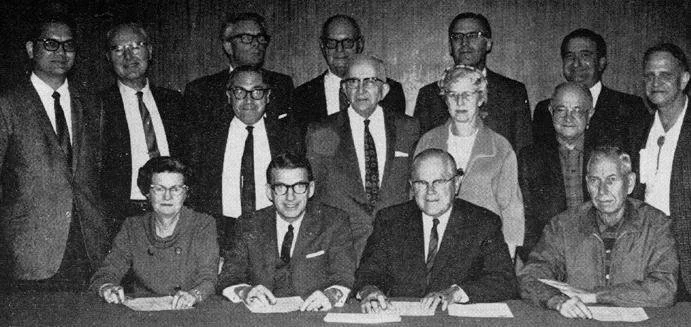
The decade closed with a crowning recognition. On January 20, 1969, the American Philatelic Society designated WESTPEX a World Series of Philately show — meaning every Grand Award winner at WESTPEX would automatically be eligible for the APS Champion of Champions competition.
The first WESTPEX, ten years earlier, had drawn 17 dealers and finished with a $900 surplus. The tenth WESTPEX was a national event.
That, of course, was only the beginning.
↑ All eras · Continue to The 1970s →
Adapted from WESTPEX – The First 50 Years by Kristin Patterson, © 2010 WESTPEX, Inc. · About this history →