
Adapted from WESTPEX – The First 50 Years by Kristin Patterson, © 2010 WESTPEX, Inc. · About this history · ↑ History overview
By 1970 the show was a national fixture, and Joseph Clary — chairman of every WESTPEX since the first — was ready to step away. The man who’d been his vice-chairman for the entire decade took over, and the 1970s became the years WESTPEX grew up: dual-show ambition, an Australian-themed cachet, an APS national show held alongside its own annual exhibition, and the smallest Miss WESTPEX in the show’s history.
A New Chairman, 1970–1971
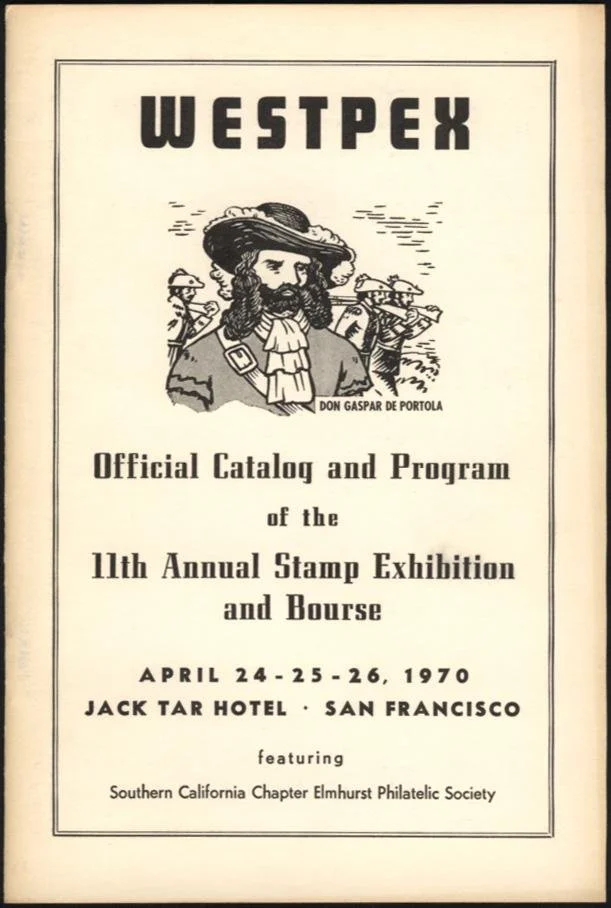
At the post-show meeting on May 19, 1969, Clary and his treasurer Robert Turnbull both asked to be relieved. Clary was approaching retirement and could no longer give the chairmanship the year-round attention it required. Cyrus R. Thompson, his vice-chairman of ten years, was the obvious successor. He hesitated — saying he couldn’t take the role without a treasurer, bin-room chairman, layout man, and publicity chairman in place — but agreed to serve as interim chairman. Within months he’d recruited what he needed and was leading the eleventh WESTPEX.
The 1970 show wouldn’t turn out as planned. On March 31, just weeks before opening, Thompson had a heart attack and was “grounded” for eight weeks. Clary stepped back in to run the show. Despite the disruption, attendance was strong and forty dealers attended — the largest bourse in WESTPEX history to that point.
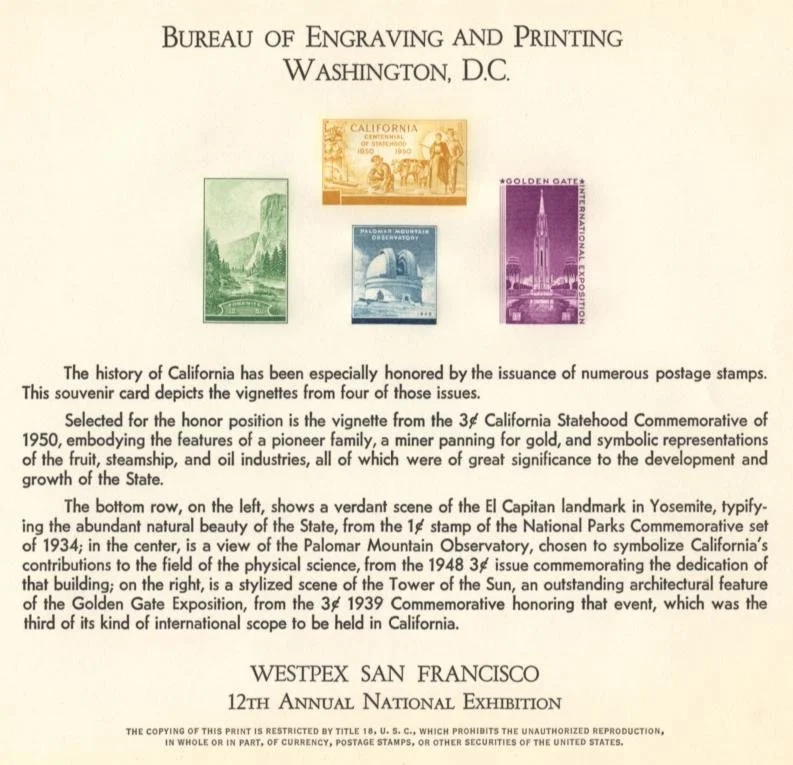
Thompson’s 1971 cachet honored Don Gaspar de Portolà, the Spanish governor of Las Californias who founded San Diego and Monterey two centuries earlier. The same year, the WESTPEX team partnered with PHILATOKYO ’71 in Japan, producing matching covers in San Francisco and Tokyo to commemorate the centenary of Japan’s modern postal service. The Bureau of Engraving and Printing honored WESTPEX with a special souvenir sheet showing four California-related stamps and demonstrated intaglio printing live at its booth.
The Show Finds Its Voice, 1972–1973
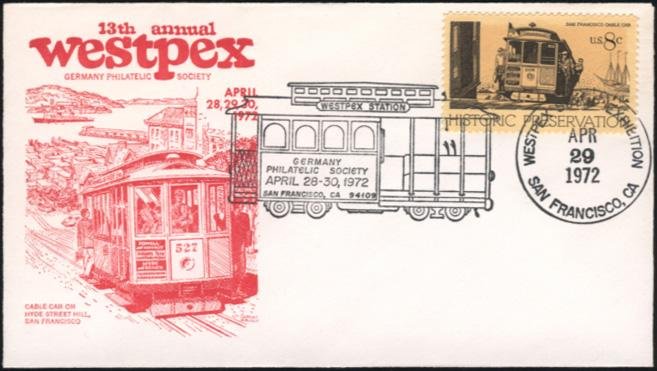
The thirteenth WESTPEX in 1972 leaned into San Francisco identity. The cachet by Jerry Wright featured the city’s newly issued cable car commemorative — “the only moving National Historic Landmark” — and the show issued a matching postcard with the WESTPEX pictorial cancel. The U.S. Postal Service ran a special Apollo 15 exhibit at its booth, the ninth manned mission and fourth to land on the moon.
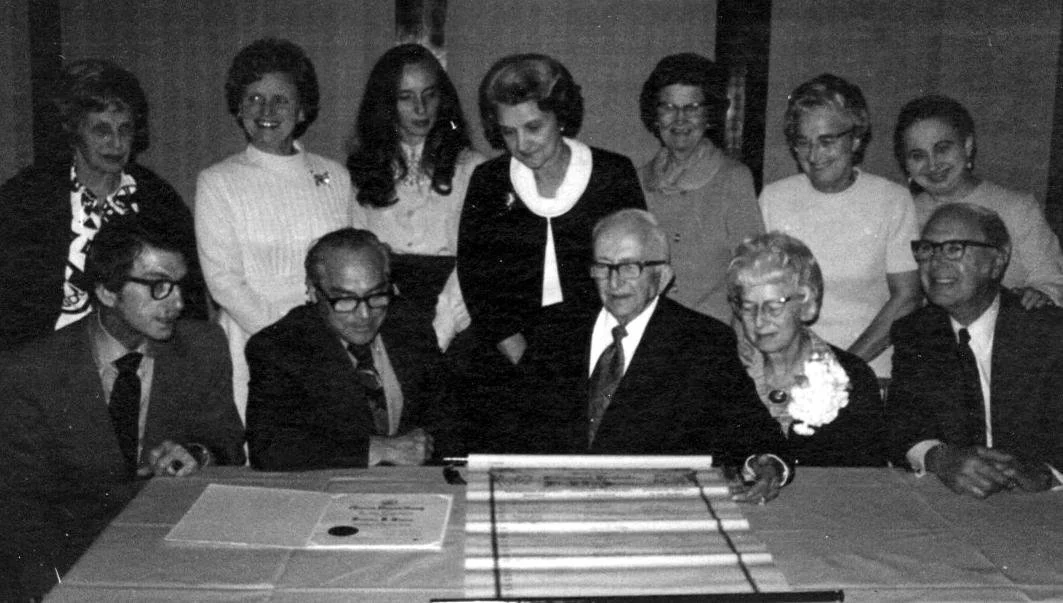
That October, charter member Fred B. Thomas received philately’s highest honor — the Luff Award from the American Philatelic Society — for “meritorious contributions to philately.” Thomas had served the APS for twelve years as vice-president, president, and past president. Unable to travel to the StampShow ceremony, he signed the Luff scroll at a special dinner at the Galleon in Alameda, surrounded by the WESTPEX directors and their spouses.
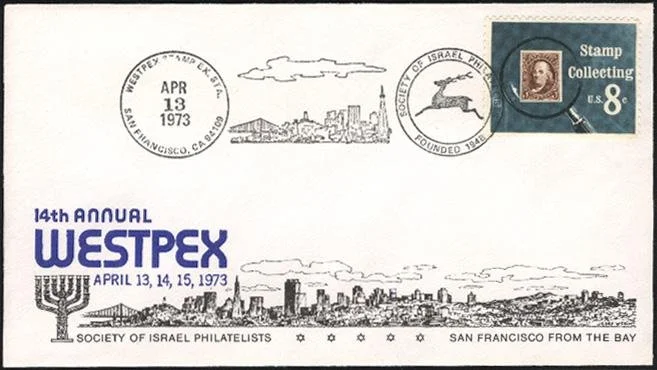
1973 brought several firsts: a souvenir card (the first WESTPEX issued), a Canadian Postal Service booth alongside the U.S. and U.N. (three postal administrations now), and a $1,000 donation to the American Philatelic Research Library’s Building Fund — making WESTPEX one of just 110 APRL Founder Members. The cachet by Jerry Wright featured a San Francisco skyline including the brand-new Transamerica Pyramid, completed the year before.
Service, Setbacks, and the Smallest Miss WESTPEX, 1974–1975
The 1974 show ran during the oil crisis. Gas had spiked to a then-shocking 60¢ per gallon, and exhibit chair Russ Sanford urged Bay Area collectors to carpool. The show finished with a deficit for the first time. Avon Stamp Auctions, the official WESTPEX auctioneer for fourteen years, was replaced by Richard Wolffers, Inc., who would serve the next fourteen.
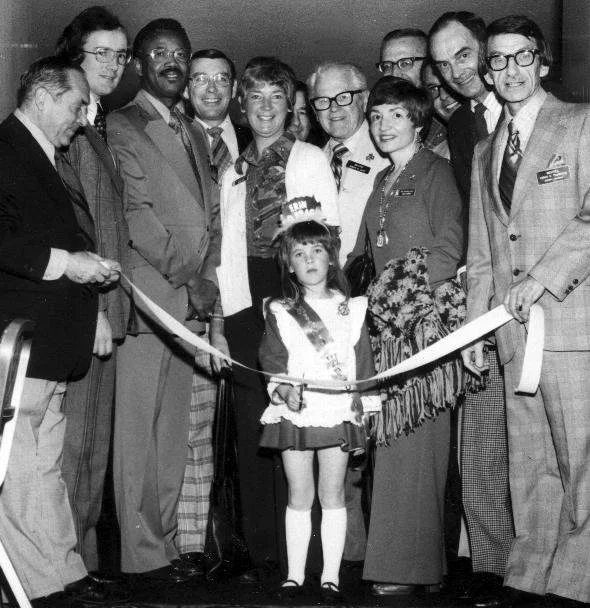
The 1975 show is the one everyone still remembers. The youngest Miss WESTPEX in the show’s history was six-year-old Tara Pope, daughter of volunteer Preston Pope. Most six-year-olds lose their first tooth around that age — Tara had braces coming in, and a week before the ceremony her dentist pulled all four front teeth to make room. Then Linn’s Stamp News sent a writer and photographer to a West Coast show for the first time. The dentist saved the day with a set of front-tooth dentures, and the smiling photo went out to the country.
Bicentennial and the Year of Two Shows, 1976–1977
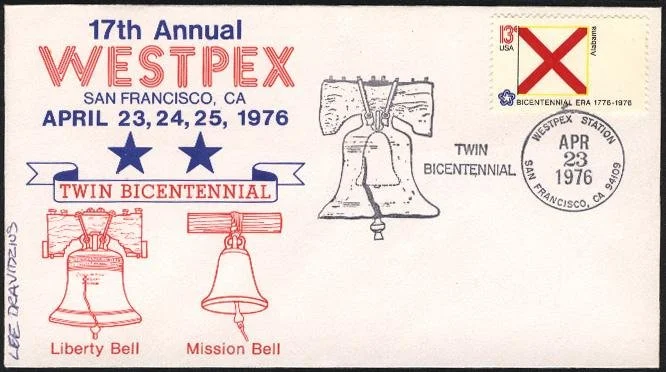
1976 was the United States Bicentennial. Lee Dravidzius of the Twin Pines Stamp Club designed a cachet showing the Liberty Bell and the Mission Bell of Mission Dolores, founded March 1776 — paired with the Bicentennial 50-state-flag stamps. After the show, the cachet drew criticism for its “amateurish” artwork, prompting Thompson to recruit veteran cachet designers for future years.
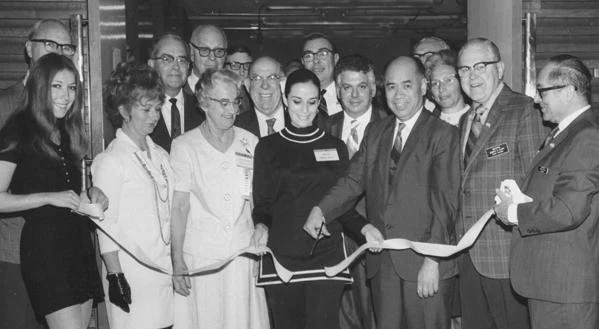
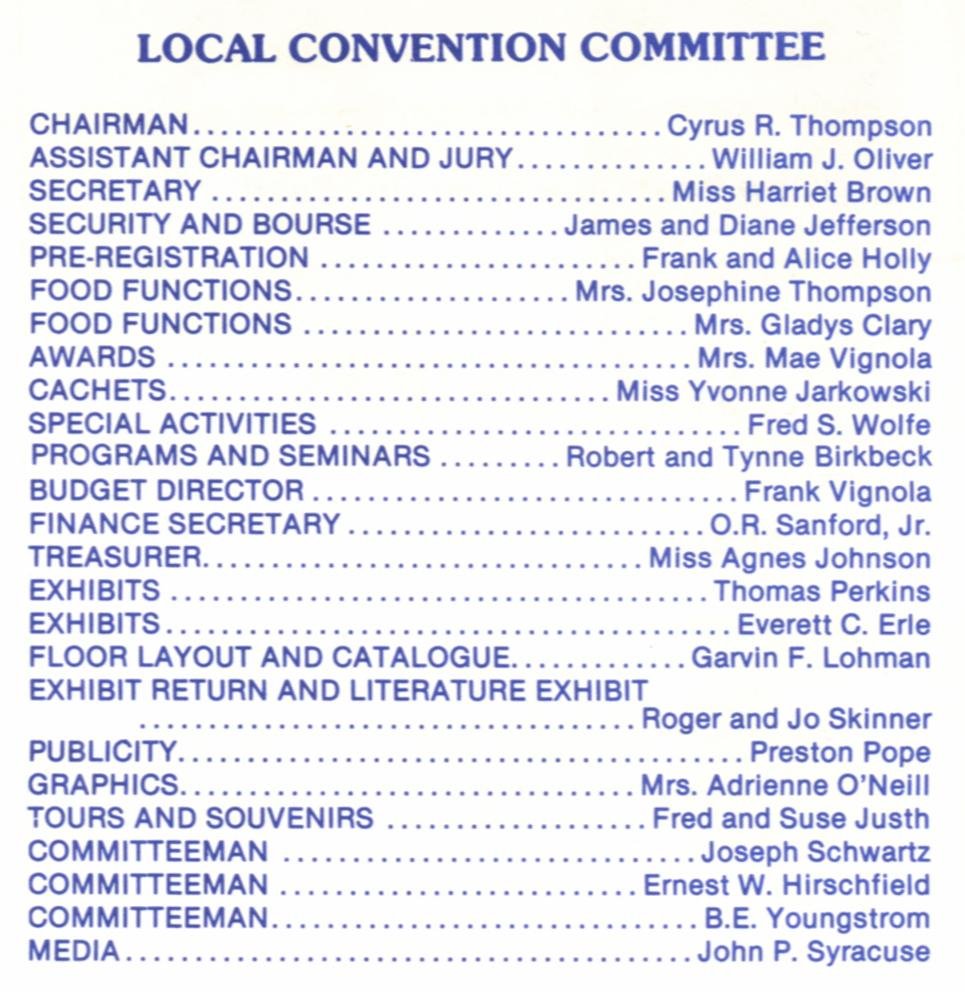
That summer the American Philatelic Society announced a milestone: the 1977 APS StampShow would be staged as its own standalone exhibition rather than as a guest at someone else’s show — and San Francisco had been chosen as the host city. For fourteen months WESTPEX volunteers worked on two national stamp shows simultaneously: their own annual April show and the August StampShow. The committee names looked similar: Chairman Cyrus Thompson, Vice-Chairman William Oliver, Treasurer Agnes Johnson, with Joseph Clary chairing the APS National Convention Committee. At the end of it Clary received the “Pooped Rooster” award — half-joke, half-tribute.
Closing the Decade, 1978–1979
By 1978 WESTPEX had renewed its Jack Tar Hotel contract through 1987 — eighteen years in the same venue with another decade locked in. The 1978 show program included the show’s first floor plan, making it easier for visitors to find the post offices, guest societies, library, cachet table, and bourse. WESTPEX began offering a $1,000 reward for assistance arresting and convicting any thief of philatelic material from a Council member, a response to a wave of stamp thefts at shows nationwide.
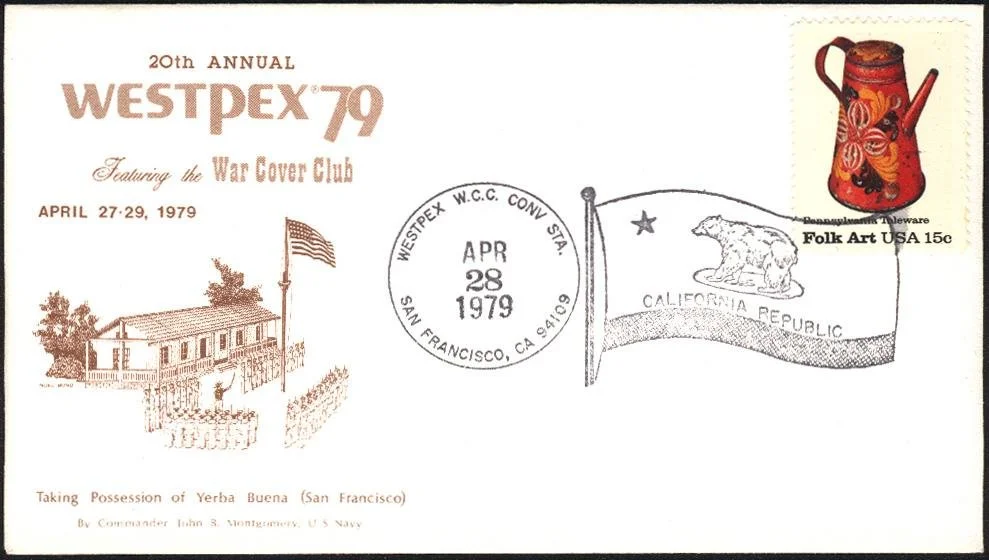
1979 was the twentieth anniversary. Noel Bond designed a cachet commemorating the U.S. Navy raising the flag at Yerba Buena (now Portsmouth Square) after the 1846 capture of San Francisco from Mexico. WESTPEX added a new gimmick: a Pitney-Bowes postage meter at the cachet table that could print double-zero franking for collectors. Six postal administrations were present that year — Canada, New Zealand, Papua New Guinea, Sweden, the U.N., and the U.S. — the most in WESTPEX history to that point.
Twenty years in, the show that had started with seventeen dealers and a $900 surplus was now drawing 52 dealers, six postal administrations, and producing two national-class shows in a single year. Cy Thompson would lead it through one more decade.
← Origins (1940–1969) · ↑ All eras · Continue to The 1980s →
Adapted from WESTPEX – The First 50 Years by Kristin Patterson, © 2010 WESTPEX, Inc. · About this history →