
Adapted from WESTPEX – The First 50 Years by Kristin Patterson, © 2010 WESTPEX, Inc. · About this history · ↑ History overview
The 1980s saw WESTPEX hand off the chairmanship for only the second time, design the medal it still uses today, weather a hotel fire and an unplanned move to Oakland for its silver anniversary, buy bigger frames, recruit an archivist, and start watching the calendar count down toward Pacific ’97.
Thompson’s Last Years, 1980 – 1982
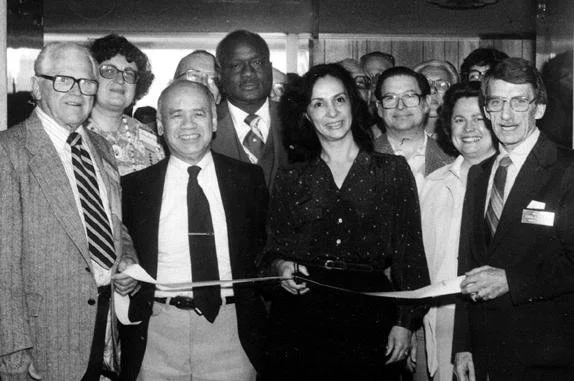
The 1980 show should have run April 25–27, but the Jack Tar Hotel had accidentally omitted WESTPEX from its booking chart. The committee accepted April 11–13 instead, holding the show at the Jack Tar for the twentieth consecutive year. The ribbon-cutting that opened the 21st WESTPEX would be San Francisco Postmaster Lim P. Lee’s last — he had officiated the show since assuming office in 1966 and would retire June 25, 1980.
1981 brought a three-week hotel workers’ union strike at the Jack Tar that complicated everything about setup. Sign, Display & Allied Crafts Local 510 picketed the loading dock; the hotel sided with the union and barred convention contractors from crossing the line. Joe Clary negotiated a workaround that let the WESTPEX volunteers themselves shuttle frames in via the loading dock. Setup happened — barely.
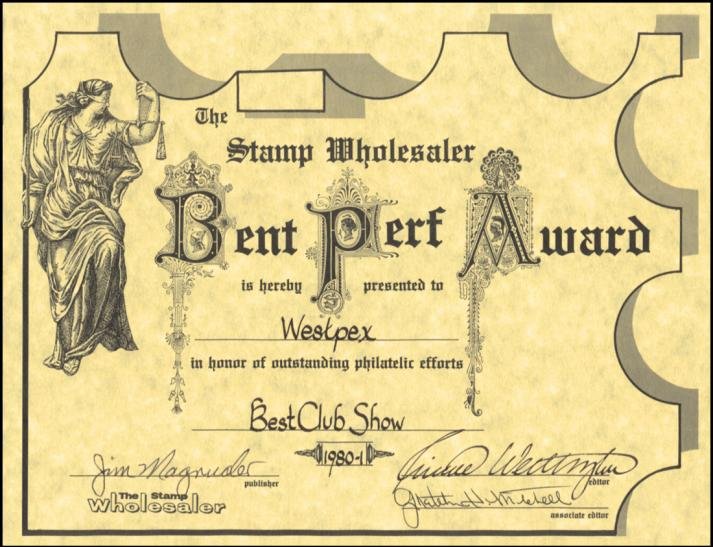
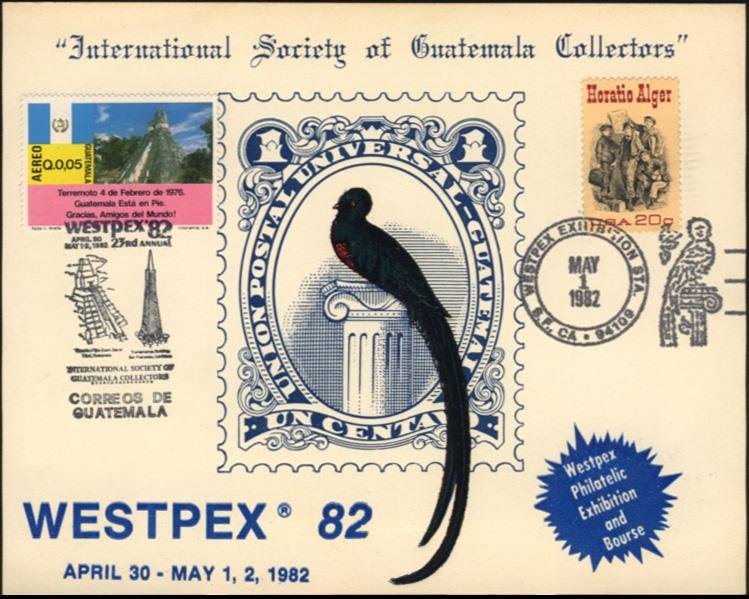
1982 was the year WESTPEX hit national rankings. The Stamp Wholesaler rated 25 national-level shows in six categories; WESTPEX placed sixth overall and drew the largest dealer-respondent base of any show ranked. Mayor Dianne Feinstein issued a greeting honoring that year’s guest society, the International Society of Guatemala Collectors. The show drew 2,600 attendees, with NBC TV coverage on Channels 4 and 5 — both with live interviews. The Guatemala society produced its own dual-cancelled souvenir card, drawing on the popularity of the format from previous years.
A New Chairman, A New Medal, 1983
Two big changes hit the 24th show. The Jack Tar was renamed the Cathedral Hill Hotel on July 1, 1982. And Cy Thompson, after twelve years as chairman following eleven as vice-chairman, announced his resignation for health reasons. William J. Oliver was nominated and unanimously approved as the third WESTPEX chairman. For the past 24 years, the show had been led by just three men: Clary, Thompson, and now Oliver.
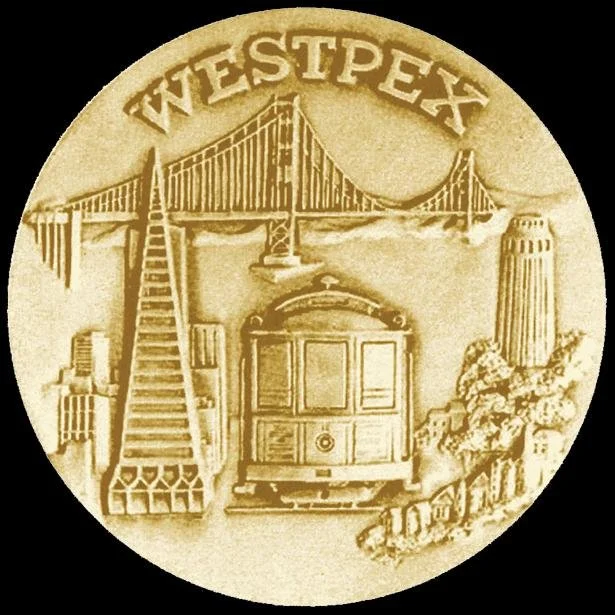
The other major change was the new WESTPEX exhibit medal. The committee selected the Medallic Art Company of Danbury, Connecticut, for the design and manufacture. The 2½-inch, 5.5-ounce medal in heavy metal high-relief brought together four iconic San Francisco landmarks: the cable car, the Golden Gate Bridge, Coit Tower, and the Transamerica Pyramid. The medal is still used today, with the exhibitor’s name and year engraved on the back of every gold, silver, or bronze awarded since.
The 25th Anniversary, 1984
The silver-anniversary show was supposed to run smoothly. Then on the evening of December 18, 1983, a fire broke out at the Cathedral Hill Hotel. Six months of repairs were needed. The committee had ten weeks to find a new venue.
Stephen Schumann reported that the Oakland Convention Center — 32,000 square feet in a single hall — could be rented for half the price of Cathedral Hill, with a free setup day Thursday and a free takedown Monday. The decision was made: WESTPEX would cross the bay for its 25th anniversary. The Hyatt Regency Oakland gave attendees a $67 group rate, and the Awards Banquet was held at nearby Jack London Square because the Hyatt’s function room was already booked.
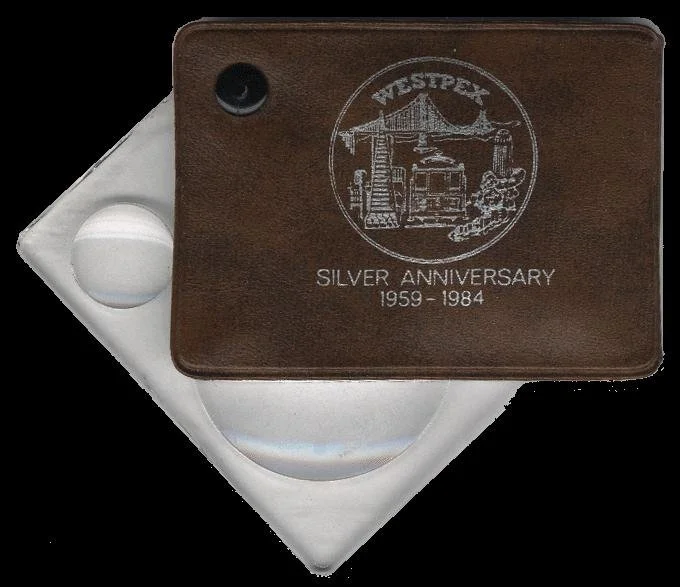
The Oakland venue turned out to favor the show in unexpected ways: the better single-hall floor plan meant more visitors actually walked through the exhibits. The first Youth Activity Center debuted at this show — a venture that proved a huge success and would become a permanent fixture.
Returning Home, Going Bigger, 1985 – 1987
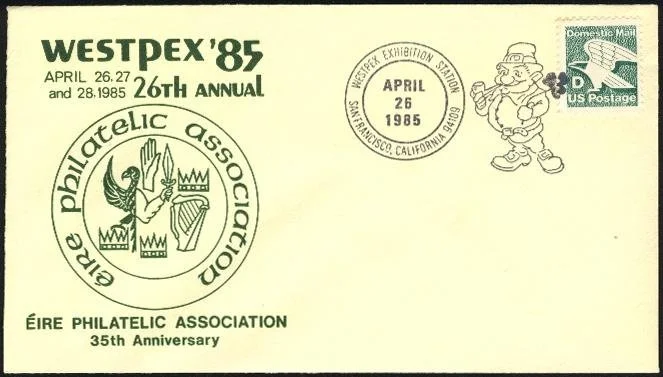
For the 26th show, WESTPEX returned to the (re-opened, re-named) Cathedral Hill Hotel in San Francisco. Tara Pope — at six the youngest Miss WESTPEX in the show’s history back in 1975 — accepted Preston’s invitation to perform the 1985 ribbon-cutting at sixteen, this time with all her front teeth. The Éire Philatelic Association marked its 35th anniversary as that year’s guest society.
1986 brought competition. AMERIPEX, the eleven-day International Stamp Show, was scheduled in Chicago just three weeks after WESTPEX. Sixty-one dealers came anyway. Charter member Fred B. Thomas, one of the original Permanent Exhibition Committee from 1955, had passed away on Christmas 1985; WESTPEX gave $100 in his memory to the American Philatelic Building Fund. That year was also the last year of cachet seals — the format had run its course.
1987 was a quiet milestone year. WESTPEX bought new 16-page exhibit frames from AMERIPEX’s show — a 25% capacity increase per frame, the result of a ten-year vision Thompson had broached back in 1976. The California Collectors Club donated $3,000 for use of 100 frames at its CALPEX show in exchange. Gerhard Wolf volunteered as the show’s archivist that year — and would serve in that role for twelve years, plus eight more as corporate secretary. It is largely Gerhard’s archives that made the 50-year history book — and these web pages — possible. Sunday at WESTPEX became known as Council Day: free admission for all Council club members.
Pacific ’97 and 30 Years, 1988 – 1989
On October 18, 1987, the APS selected San Francisco as the host city for Pacific ’97 — a sanctioned international stamp show that would be one of the biggest philatelic events of the decade. For the next ten years, most WESTPEX volunteers would spend much of their year on Pacific ’97 in addition to their own annual show. The countdown had begun.
The 1988 show hosted the Society of Israel Philatelists for the third time, and introduced WESTPEX’s first docent tour: Dr. Leopold Dickstein leading a critique of the SIP’s 142 frames of Holy Land and Israel Philately on display.
The thirtieth WESTPEX in 1989 was a deliberate celebration. Admission was free for all attendees. Exhibitor names — concealed for safety reasons since 1973 — returned to the show program after sixteen years. Superior Stamp & Coin Co. became the new auctioneer. The cachet by the Errors, Freaks & Oddities Collectors’ Club featured the famous $1 Americana “CIA Candleholder” invert, paired with the 4¢ Hammarskjold special-printing inverted. The cachet later won a Gold Certificate at the Albuquerque Philatelic Society’s First National Show Cachet Competition, placing third out of 32 entries.
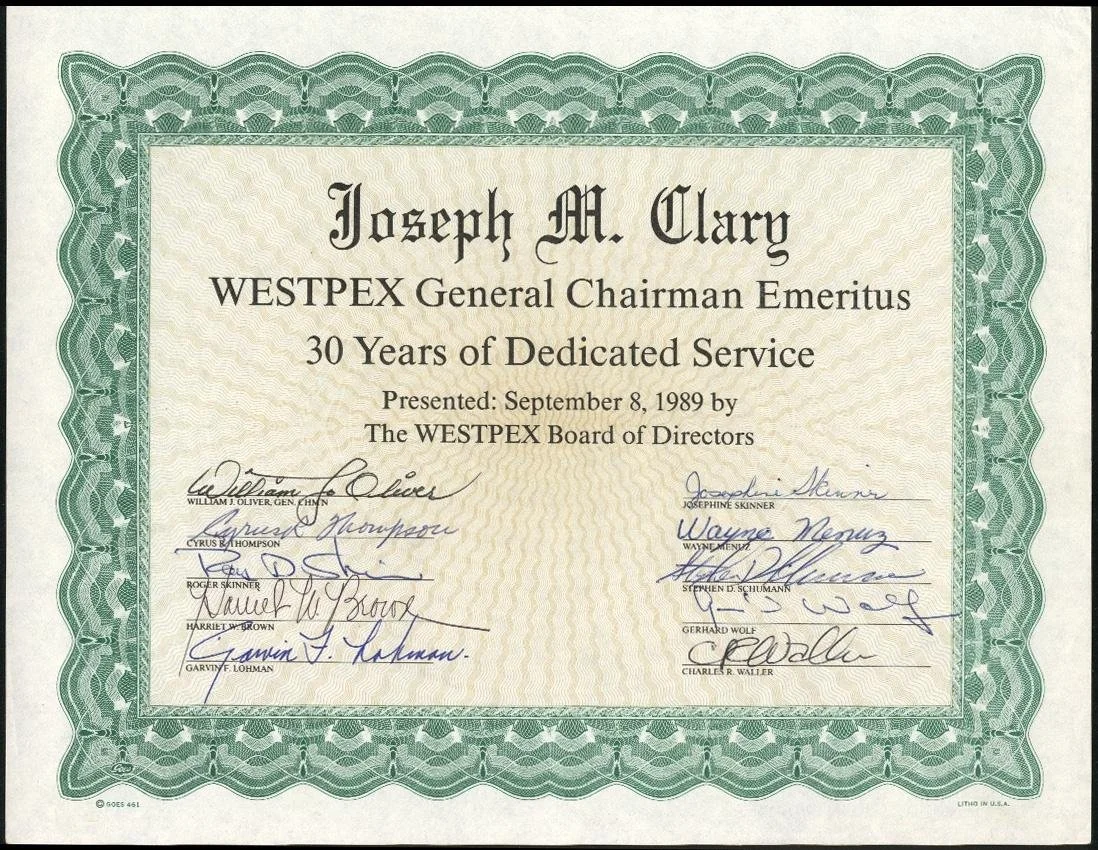
And at the 1989 banquet, Chairman Oliver surprised Joe Clary with a presentation: a certificate signed by all the directors and a gold wristwatch, marking thirty years of dedicated service. The man who had chaired every show from the first ten years and continued as vice-chairman for all twenty since had been there from before there was a WESTPEX.
The decade closed with WESTPEX firmly established as one of the country’s top national shows, a new medal that would last forty years and counting, an archive being kept, and a date with international philately ten years out.
← The 1970s · ↑ All eras · Continue to The 1990s →
Adapted from WESTPEX – The First 50 Years by Kristin Patterson, © 2010 WESTPEX, Inc. · About this history →